Download Icloud For Mac

How to download iCloud for PC iCloud works on PCs running at least Windows 7 operating system. Thus, you must to verify the Windows version on your PC. To enable iCloud on your Windows PC, first set up iCloud on your other devices, then install iCloud for Windows.
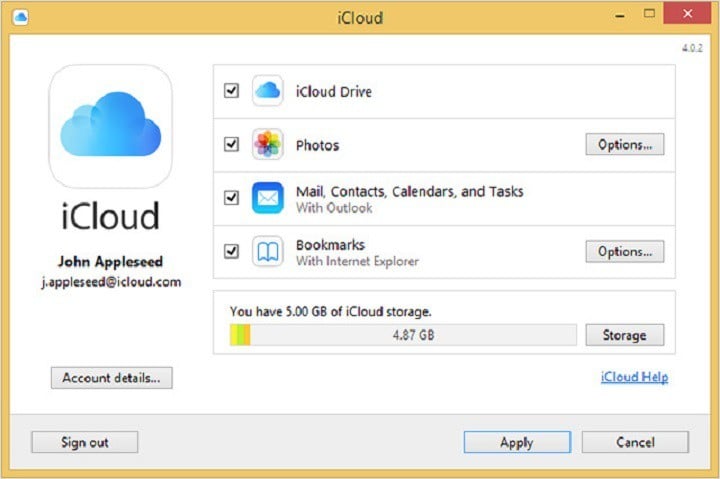
Your photos, documents, Internet Explorer bookmarks on your PC are updated automatically to your Apple devices. You can download iCloud for Windows directly from Apple website. In order to use it, you must have one iCloud account. After download, iCloud should install automatically. After, you must to restart your computer. In order to use the iCloud features, you need to enter your Apple Id or iCloud account.
How to use iCloud on PC You can choose the data that you want to sync. By default, all data related to iCloud drive, photos, mail, contacts, calendars, tasks, bookmarks, are checked to be synced. One iCloud account has 5GB storage. Features like Mail, Contacts, Calendars and Tasks can be used with Outlook.
Remember that you need to set up iCloud on all of your devices, then download and use iCloud for Windows on your PC. Your Photo Stream automatically downloads the most recent photos from your iPhone, iPad or iPod to your PC. If you have checked the Bookmarks checkbox also when you have set it up, iCloud keeps your browsers - like Internet Explorer, Google Chrome or Firefox - bookmarks on Windows in sync with your Safari bookmarks. You will enjoy your bookmarks from any browser that you use. How to download iCloud for Mac Firstly you need to check if you have on your PC the latest version of operating system. You can check it easy from the top left corner of the desktop, on the Apple symbol. Just open About This Mac and you will see your OS version.
You must have at least OS x 10.7.5. If you have an earlier OS version and you upgrade to the latest version (in every case, it needs to be above 10.7.4) of Mac, the good thing it is that you will have the iCloud also.
ICloud it is a feature built into the newer Mac operating system. You have to signing up for an iCloud account by using your Apple ID or your email. If in the past you bought items from iTunesStore, iBookStore or AppStore, you have already an Apple Id. Actually, if you are logged in your Appstore or iTunes account, iCloud shows you the email address already filled out in the Apple Id section. If you are a brand new user of Apple devices, just click on Create an Apple ID.
There’s no macOS issue I hear about more than iCloud Photo Library. It's a service that answers many users’ needs, but there are some not-quite-outlying demands that fall through the cracks. This often revolves around being able to get a full set of your images and movies in iCloud Photo Library if you don’t have enough storage on your Mac startup volume. Macworld reader Shai wrote in with such a concern recently.
They have a 300GB media library synced with iCloud Photo Library and a modest disk drive on their MacBook Pro, so Photos for macOS is set to optimize media. The full-resolution versions of images and video are thus only held in iCloud. When trying to extract their library to shift it to Google Photos, they hit a number of roadblocks. As mentioned, they don’t have the local capacity to download.
iCloud.com doesn’t offer a great way to select and download multiple images. On a higher-capacity Windows laptop, which had room for the full library, iCloud software stalled for hours and then filled the drive with unusable files and only retrieved 17GB of actual media files. Shai notes that competing cloud providers, Amazon and Google, offer programming interfaces that let a developer, like them, write software that would let them pull their data down even if there were no graphical interface or software provided. Apple doesn’t have an API for iCloud exposed to users. (macOS software developers have certain access mediated by Apple for individual user accounts that are logged into iCloud while using the app.) The only method I can recommend is to purchase an external drive of 500GB or 1TB, which are fairly affordable with USB 3.0 support. Then follow these steps:.
Plug in the external drive, and make sure it’s properly formatted. Make sure Photos isn’t running, and then copy your Photos library to the external drive.
There’s no special procedure for copying, as macOS handles the library just like a normal file. When that’s complete, hold down the Option key and launch Photos. The library on the internal drive will be labeled after its file name in parentheses with “(System Photo Library)”. Click Other Library and select the copied library on the external drive.
Select Photos Preferences and, in the General tab, click. In the iCloud tab, make sure iCloud Photo Library is enabled. It may not be, because you switched libraries. Then choose Download Originals to This Mac. Photos will now attempt to download all the media stored in your iCloud Photo Library to the external drive. You can interrupt the process by quitting Photos and ejecting the drive. The next time you plug the drive in, it should resume even without launching Photos, as Photos has a background agent that manages syncing.
The iCloud tab in Preferences shows progress. Depending on your bandwidth, the download could take hours to days (or even longer) to complete. When it’s done, you should have a complete set of your images and videos, and can then take steps to shift to Google Photos. However, one note of configuration warning with Google Photos: its deletion behavior after your Mac has uploaded media. If you want to upload a set of media larger than your drive per above and then delete pictures and movies from your drive, you have to make sure that the Backup and Sync utility’s Removing Items preference is set to Don’t Remove Items Everywhere or Ask Me Before Removing Items Everywhere. If set to Remove Items Everywhere, deleting media from your drive also deletes it from Google Photos.
Download Icloud For Mac
Ask Mac 911 We’ve compiled a list of the questions we get asked most frequently along with answers and links to columns: to see if your question is covered. If not, we’re always looking for new problems to solve! Email yours to including screen captures as appropriate, and whether you want your full name used. Every question won’t be answered, we don’t reply to email, and we cannot provide direct troubleshooting advice.