Firewall For Mac

Share on Facebook Tweet this Share Internet security is no joke, and one of the most common ways hackers and malicious software can get into your computer is through unsecured network ports. By using a firewall, you close or hide the open ports on your network, opening and using them only when needed and hopefully protecting traffic being both sent and received by your system. It’s a delicate balance, because some firewalls don’t do enough to protect you and your information, while others close off too many ports, require a lot of user maintenance and cause problems with access to online games or streaming services. Depending on your operating system, you may already have a firewall installed that’s just waiting to be activated, but even if you do, you may want more protection from all the sketchy people and computers on the internet who want at your stuff, and we’ve got you covered. Windows Firewall Windows has included a firewall with its operating system since XP, and it’s simple to use. The are a few main advantages of their software. If you’re running Windows 7 or newer, it’s already enabled by default the first time you boot up the computer.
Firewall For Mac Download
It’s easy to change settings based on profiles, which the firewall automatically recalls and applies each time you reconnect to a network. On the downside, although Windows Firewall closes your stealths ports from incoming traffic, it doesn’t always restrict outgoing traffic, especially if trusted programs have been infected with malware. The program also allows you to block all incoming connections if you’re worried about security on a very public network, including trusted programs. While this setting shouldn’t interfere with internet browsing or email, it will prevent some programs that use other ports from being able to access the network and beyond. The built-in Windows firewall, for better or worse, can get a little overzealous when preventing applications from accessing the internet, but is a great place to start if you currently don’t have any protection. TinyWall TinyWall is a lightweight upgrade to the built-in Windows firewall, adding a more advanced controller and blocklist without adding a lot of new software or drivers to your system.
Firewall For Macbook Pro
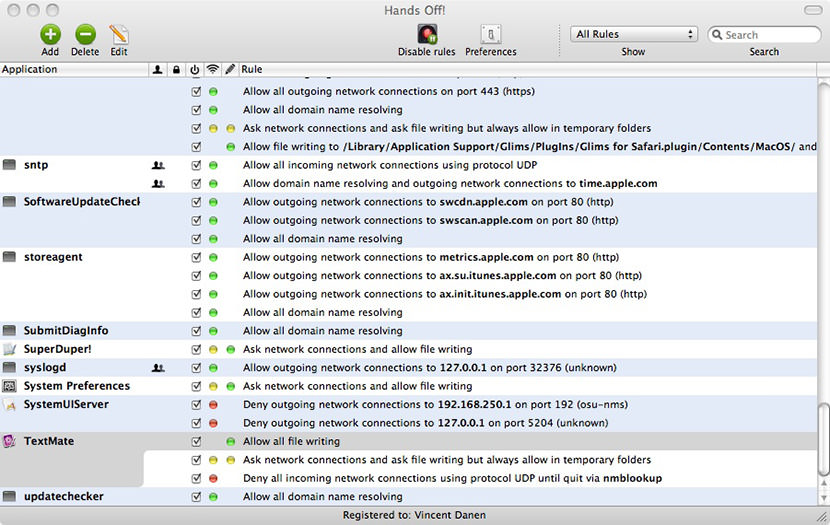
The software shines in it’s non-intrusive operation. It has no popups that ask you to approve or block applications and ports, and instead utilizes a tray in the notification bar to alert you to security threats and current connections. From this menu you can blacklist or whitelist certain applications and ports that you want to close or use. TinyWall also acts as an added layer of prot.
Should Mac Firewall Be On
How to Configure Firewall for 'OMessenger' on MAC OS X If you are installing the OMessenger on a MAC OS X, we recommend to configuring the Firewall settings in order to run OMessenger in your network, as described below. Firewall Configuration Launch System Preferences and click to open the Sharing System Preference pane. From the row of tab buttons, select Firewall. From the Firewall window in the Sharing pane, click the New button. Change the Port Name CVC to Other and give the TCP port Number, the UDP Port Number and a Description as shown in the Example Screen Shot below. OMessenger is added to the Firewall Settings.